I presented my research at the DCASE Applied & Industrial Research (AIR) Workshop 2026, hosted across MIT and Tufts University. DCASE (Detection and Classification of Acoustic Scenes and Events) is a community of researchers and companies building machine listening systems: AI that can hear, recognize, and make sense of sound. While the main DCASE workshop focuses on new methods and benchmarks, AIR is all about how this technology is actually being deployed and used in the real world.
It was great to be surrounded by people developing new audio technology, and I was glad to share how this technology is being applied to music education. My talk, Designing AI Music Tools with Students, covered my classroom study of how AI music tools affect students’ confidence, the pros and cons students experienced, and how their feedback shaped an educational AI interface we designed together.
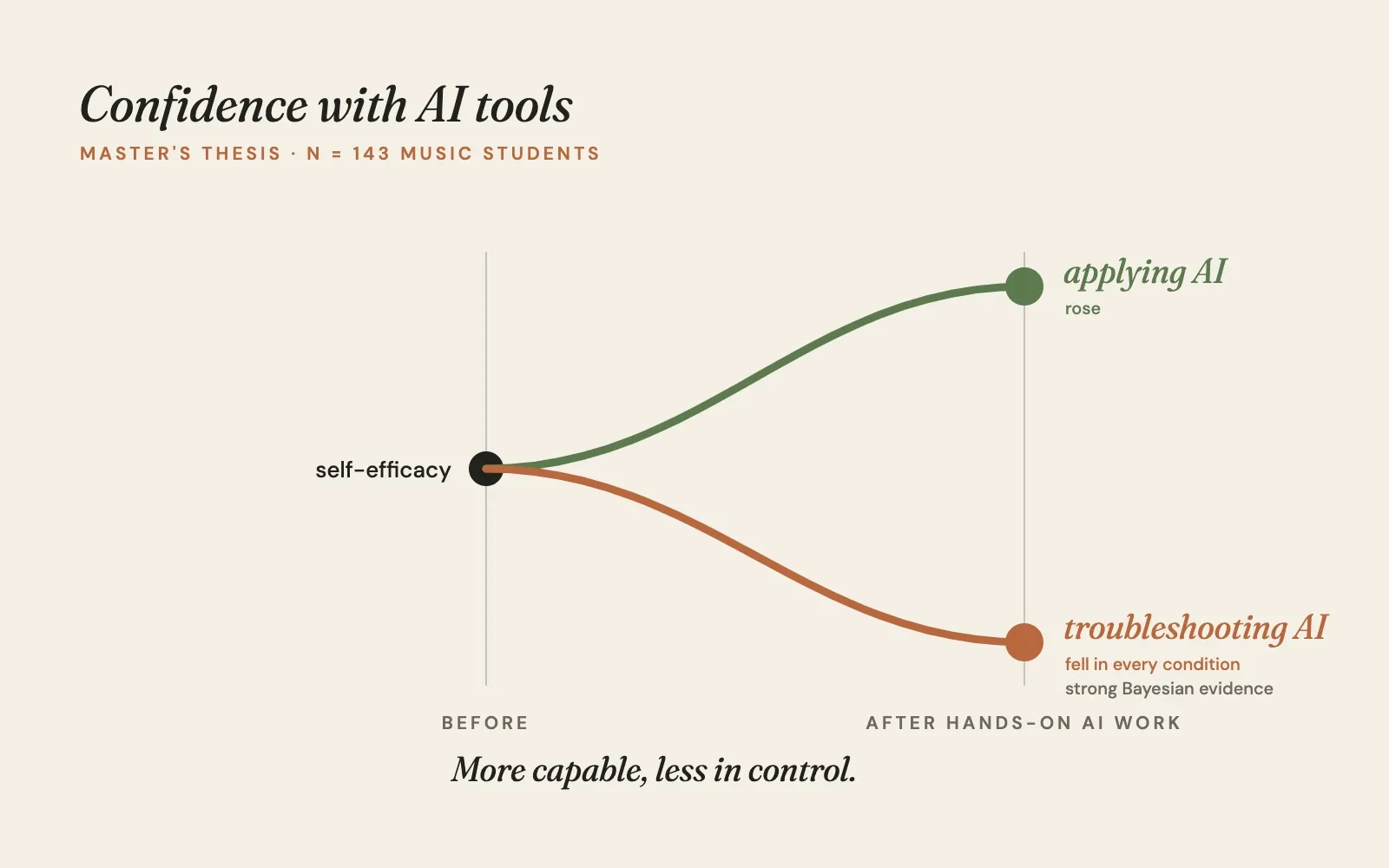
On the plus side, hands-on assignments with tools like Moises made students more confident using AI for their coursework. On the other hand, students in every group felt less confident fixing things when the tools broke, and they named four main barriers: a lack of control and transparency, unreliable outputs, questions of originality and ownership, and steep learning curves.
A lot of the work presented went deep into areas of machine listening well outside my own background, and I’m grateful for how much it stretched me. Some talks took real effort to keep up with, but that’s exactly what made the day so valuable. I came away with a lot of new questions and ideas to dig into.
You can see my poster below, and read more about the research in my thesis post.
Cover photo: Chris Rycroft, CC BY 2.0